
How Can Food Handlers Control the Potential for Cross-Contamination
One of the hardest things for people to learn and think about when taking care of a child with food allergies is cross-contamination. Just like how restaurants have cross-contamination prevention strategies, so should your house to reduce the risk of an allergic reaction. This is something that can slip through the cracks, especially as guests start coming over or people who are not familiar with allergies are around your child. I'm going to talk about four easy implementations that you should do and learn how food handlers can control the potential for cross-contamination.
Guests and Events
As people start coming over to your house for things like birthday parties, family gatherings, and other events, it can be hard to keep track of all the possibilities of cross-contamination. It is very important to have a set of rules that guests follow, so that you can keep everyone as safe as possible.
To keep people safe, there needs to be a universal standard for your guests. I call this the guest protocol. Create a list that is easy for people to follow and specific to food allergy safety. This might include washing your hands when you enter the house, using certain silverware, not sharing drinks, etc. It might be a little bit awkward at first to have these rules for your house guests, but it is very important for keeping your child and even other people who visit who have allergies safe.
Another simple thing that you can do to reduce the chances of cross-contamination is to put your condiments in squeeze bottles. Something that happens often at gatherings is people touching the condiments to food, and then the people who use that condiment after will have a chance of getting that food put on their plate. Transferring these toppings, such as ketchup, mustard, mayo, BBQ, etc, into squeeze bottles reduces the chance of food touching the bottle significantly.
Home Kitchen Safety: How can food handlers control the potential for cross-contamination?
One of the places where cross-contamination happens the most is in the kitchen. That is why I want to talk about some easy-to-implement kitchen safety techniques that will help with food safety in your home. First is the traffic light system. This is great for any age, but especially young kids. Simply put red stickers on the allergen foods and green stickers on the allergy-free foods. It is easy for a young child to learn. This is also great for people who are not familiar with the allergens in the household, like babysitters. They can easily see a red sticker and know that they can not give this food to the child with allergies. If you have a young child who can't reach the upper shelves of the pantry, then place the allergen foods on the top so they can not grab the food and eat it without your supervision.
This final tip is when you are cooking. Plan out what you are going to cook first. If you are making a non-allergen and allergen meal, make sure you are cooking the allergy-free meal first. This will save you time from having to clean your utensils and also reduce the chance of people forgetting and serving food that is contaminated.
Creating a safe kitchen doesn’t mean you have to be perfect every single second; it’s just about building consistent habits. By sticking to these routines like the traffic light system, squeeze bottles, planning out your cooking order, and guest protocols, you are effectively answering that big, technical question: how can food handlers control the potential for cross-contamination? The answer really just lies in preparation. At the end of the day, you are the most important food handler in your child’s life, and these small changes are what turn a chaotic kitchen into a safe zone.
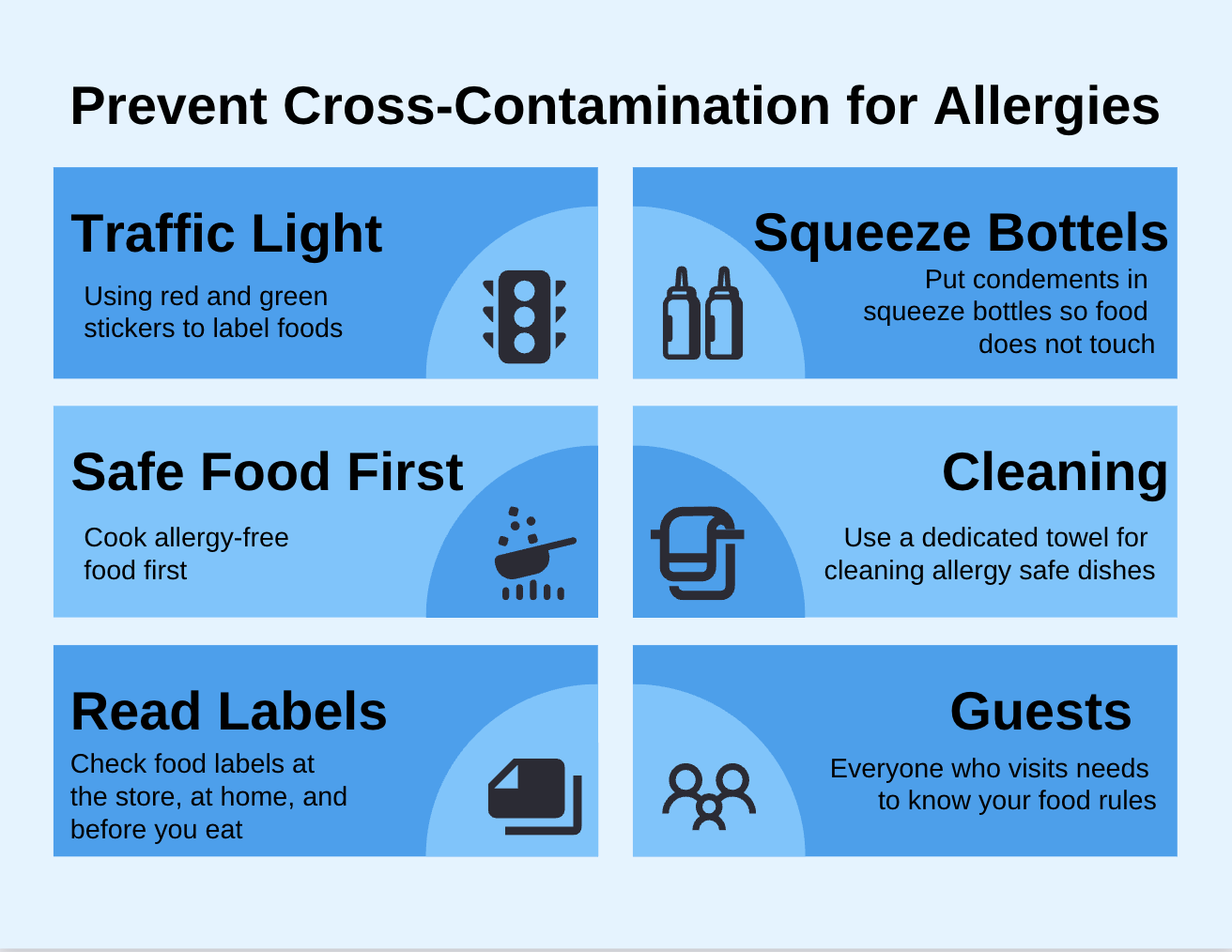
Please let us know what things you do to minimize cross-contamination! Here is an infographic of some tips and tricks you can implement to keep your food safe.
